

Marcus
Ask me anything, I am here to help you.
Enquiry Form
Enquiry Form
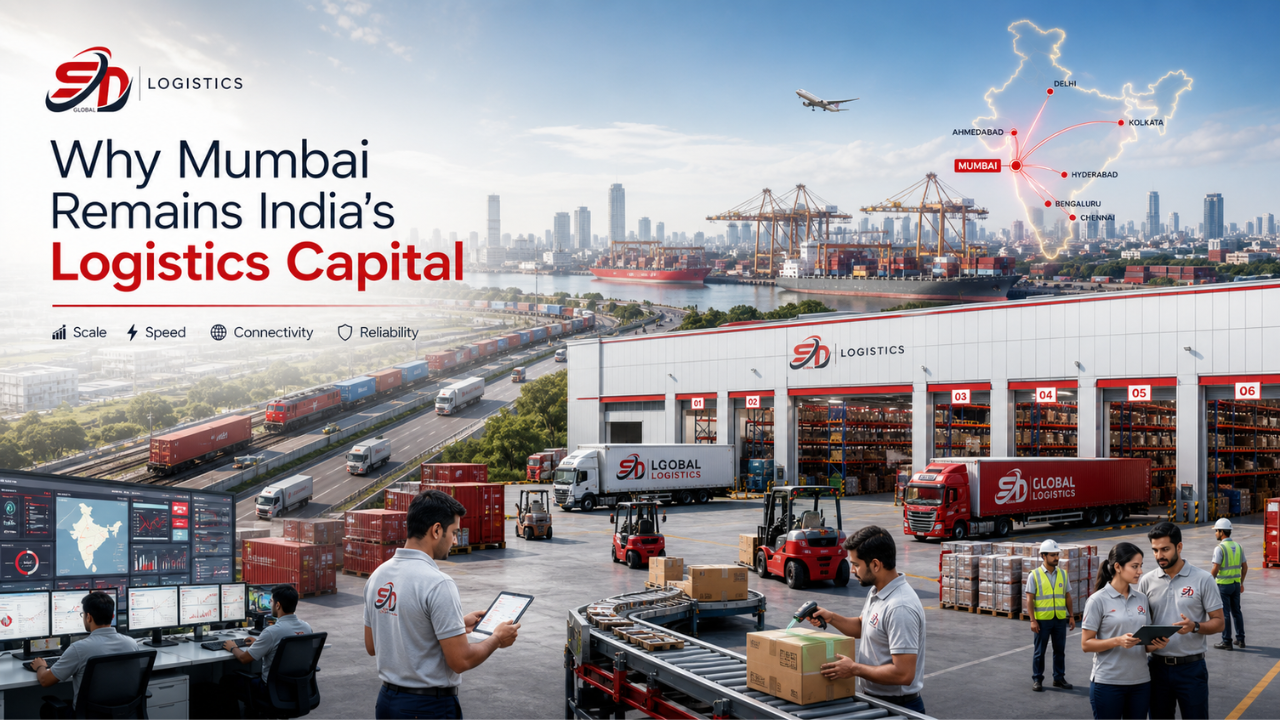
When you think of logistics in India, one city stands head and shoulders above the rest — Mumbai. It isn't just the country's financial hub; it's the beating heart of how goods move across, into, and out of India. Mumbai’s logistic system is quite hard to beat if you're a manufacturer shipping raw materials, a brand e-commerce that delivers thousand orders per day, or an importer that opens containers at the port. But why exactly is Mumbai ranked number one? Let's examine the factors.
Noida is part of the National Capital Region (NCR), offering seamless connectivity to major cities like Delhi, Ghaziabad, Greater Noida, and Every article about the logistics industry in Mumbai will be incomplete without describing the port facility. Jawaharlal Nehru Port (JNPT), located near Mumbai, is India's largest container port, handling about half of the country's containerized cargo. It has close interaction with more than 200 ports across the world and has a network of railway and road connectivity with key areas like Maharashtra, Gujarat, Madhya Pradesh and northern India.
The numbers speak for themselves. JNPT handled over 7.3 million TEUs in FY 2024-25. And the momentum hasn't slowed — JNPA handled 723,479 TEUs of containers and 8.67 million tonnes of total cargo in June 2026 alone, which is higher by 17.51% and 14.70% respectively compared to June 2025. (source)
When it comes to import-export business, a port like JNPT with such kind of a port infrastructure is not a luxury it is a necessity. A warehouse in Mumbai close to the JNPT will result in faster customs clearance time lower warehouse dwell time with the least transit cost. That's a competitive edge you simply can't replicate in landlocked cities.
At present, Mumbai's warehousing market is in absolute frenzy.Mumbai registered a 459 per cent annual surge in India's warehousing and logistics sector absorption during Q2 2026 , leading key industrial hubs across the country. Mumbai led all individual markets with 5.04 million square feet of space absorbed, supported by concentrated leasing activity in its Bhiwandi corridor.
That's not a typo — 459 per cent year-on-year growth.
Mumbai and Pune together commanded 65 per cent of total national absorption, up from 33 per cent during the same quarter last year. What does this mean for businesses? If you are in market for a warehouse in Mumbai, the demand itself is quite clear: manufacturers, retail, and other types of companies in diverse industries are concentrating their efforts on this area. A wise action is to book your Mumbai warehouse space early ahead of the shortage.
The primary drivers of warehousing demand in Mumbai are e-commerce and retail, export-import (EXIM), and manufacturing. If your business is in any of these categories, then your supply chain should be anchored in Mumbai.
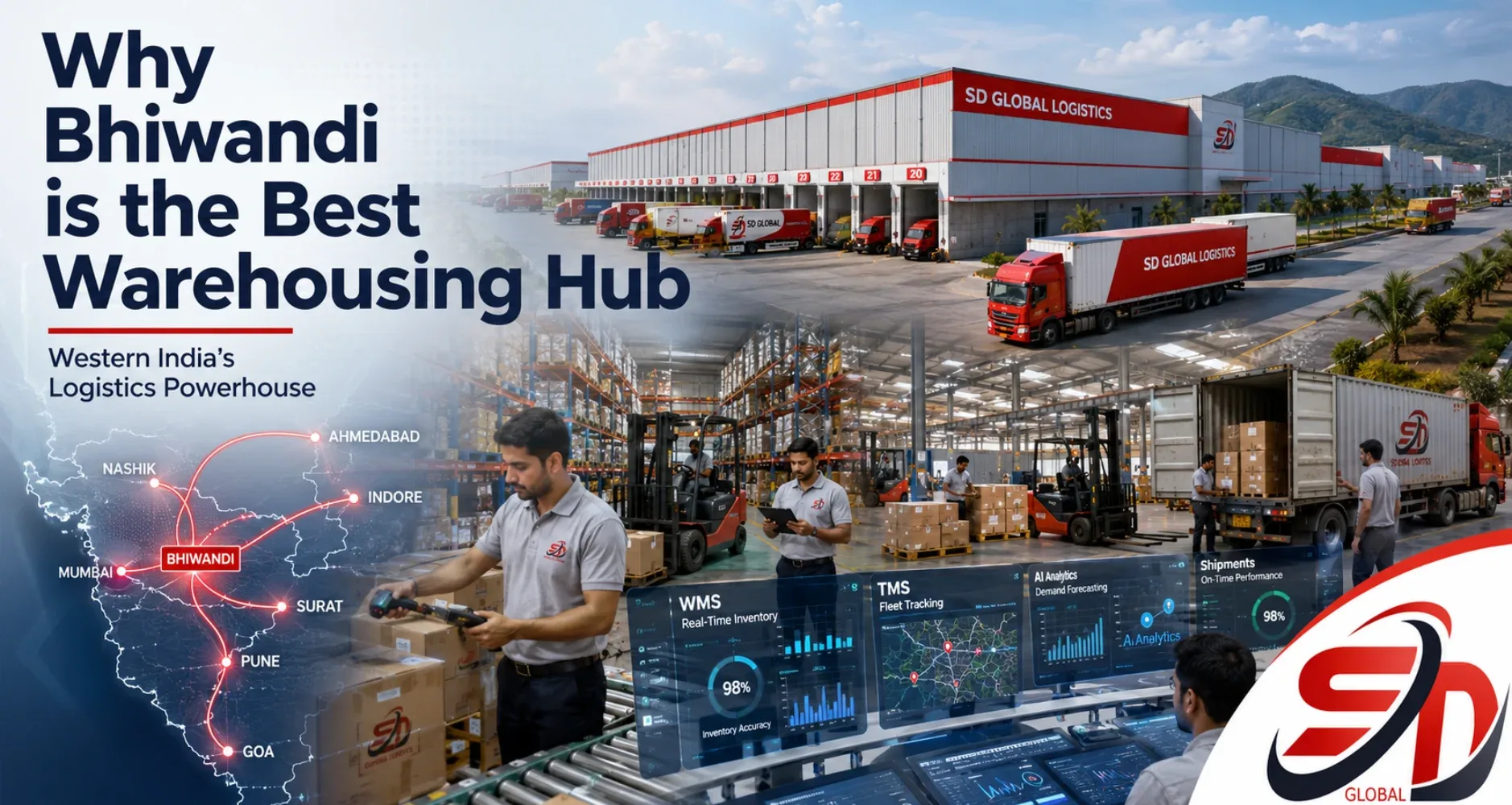
Talking to anyone who is in the logistics business, within the first few minutes you will hear the name Bhiwandi. This suburban belt has silently become the warehouse capital within the capital. Mumbai is the biggest contributor with Bhiwandi leading the way on robust lease activity that accounted for most of the city's absorptions of around 69 per cent.
What's in it for Bhiwandi? It provides plenty of parcels at much lower rents compared to central Mumbai but also provides connectivity to JNPT, Mumbai-Nashik Highway and the main distribution corridors at the same time. For brands needing a warehouse in Mumbai that balances cost and connectivity, will find Bhiwandi as the perfect combination.
Mumbai distribution networks go much above and beyond storing goods — they deliver them. Being a perfect place where different transport modes meet, Mumbai is accessible from major highways, fast rail freight lines, one of India's busiest airports, and two major sea ports. This gives businesses operating a Mumbai distribution network unmatched reach.
Mumbai's strategic location on India's western coast gives it access to global markets, making it a crucial point for international trade and e-commerce fulfilment. Whether you're shipping to Tier-1 metros or penetrating Tier-2 and Tier-3 towns across western and central India, Mumbai gives you the shortest path to market.
For ecommerce brands and D2C companies, this means faster delivery promises. For distributors and retailers, it means leaner inventories and fewer stockouts. The infrastructure here turns logistics from a cost center into a genuine growth driver.
Here's another trend worth paying attention to: the explosive growth of 3PL services in Mumbai . Third-party logistics (3PL) providers maintained dominant occupier interest, accounting for 41 per cent of total leasing activity.
That tells you two things. First of all, companies are increasingly looking to third-party companies to handle logistics rather than in-house. Second, 3PL companies are choosing Mumbai as their base — because this is where the demand, infrastructure, and talent converge.
When it comes to small and mid-sized brands, who cannot afford to maintain their own warehouses, opting for a dependable 3PL service provider in Mumbai can mean access to Grade-A warehouses, technology-driven inventory management, and a pre-existing network of distribution channels — without the large capital investment.
On a national level, the India warehouse market is projected to expand from USD 24.99 billion in 2025 to USD 27.29 billion in 2026, and reach USD 40.99 billion by 2031 at a rate of 8.48% CAGR. (source)
Where is the bulk of this activity? West India captured 35.19% of the India warehouse market size in 2025 — the largest share of any region. Mumbai sits right at the centre of that.
Mumbai and Pune accounted for 81% of the total leasing activity in Q1 2026, further underscoring the dominance of western India's logistics corridor. If you're planning to expand your logistics services in Mumbai, the macro numbers are firmly in your favour.
Mumbai's logistics supremacy is not just built on tradition. With recent investments made toward a multi-modal logistics and warehousing infrastructure, Maharashtra is poised to be an emerging logistics hub. Programs such as PM Gati Shakti and the National Logistics Policy are being implemented by the Government to focus on the development of freight corridors, improvement of ports, and expansion of the roads, which directly impacts businesses in Mumbai that depend on logistics.
Infrastructure policy reforms, dedicated freight corridors, and production-linked incentives are compressing transportation times, lowering per-unit logistics costs, and enlarging the viable catchment for Grade-A facilities.c
For supply chain managers and business leaders, this is a clear signal: Mumbai's logistics advantage isn't static. It's actively widening.
Mumbai is not India's logistics hub by chance! It has achieved this status by virtue of its port dominance, scale of warehousing, strategic geographical location, world class infrastructure and rich ecosystem of service providers. Whether you're an importer clearing containers at JNPT, an ecommerce brand fulfilling orders from Bhiwandi, or a manufacturer distributing across western India, Mumbai gives you the tools to move faster and more efficiently than anywhere else in the country.
If your supply chain doesn't run through Mumbai yet, it's worth asking — why not?
From growing businesses to established enterprises, companies rely on SD Global Logistics to manage critical warehousing and logistics operations.















" We struggled with inconsistent inventory handling until SD Global stepped in with dedicated warehousing and tight process control. Their attention to detail brought stability to our entire supply chain. "

" Reverse logistics was a major pain point for us. With SD Global’s reverse logistics management and WMS integration, we finally got the visibility and efficiency we needed. "

" As a growing startup, flexibility was key. SD Global’s on-demand warehousing and responsive support scaled with us without locking us into rigid contracts. "

" Order delays used to slow us down. Thanks to SD Global’s order fulfillment and B2B logistics, we’re now running faster and more reliably than ever. "

" Our nationwide expansion needed a reliable network. SD Global’s Pan-India 3PL and shared warehousing model gave us the reach and agility we were missing. "
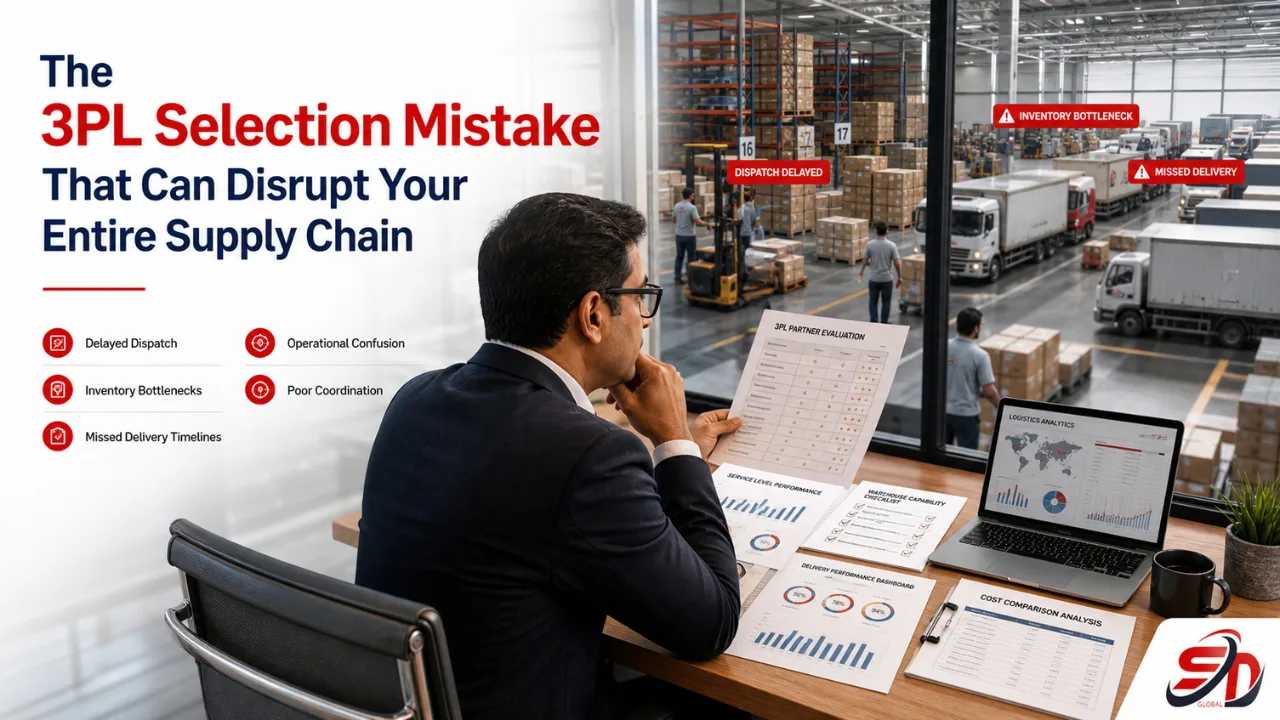

The most common error that companies make when choosing a 3PL is simply looking at the cost or warehouse capacity without assessing operational capability, technology, network, scalability, service levels and supply chain impact.
View Blog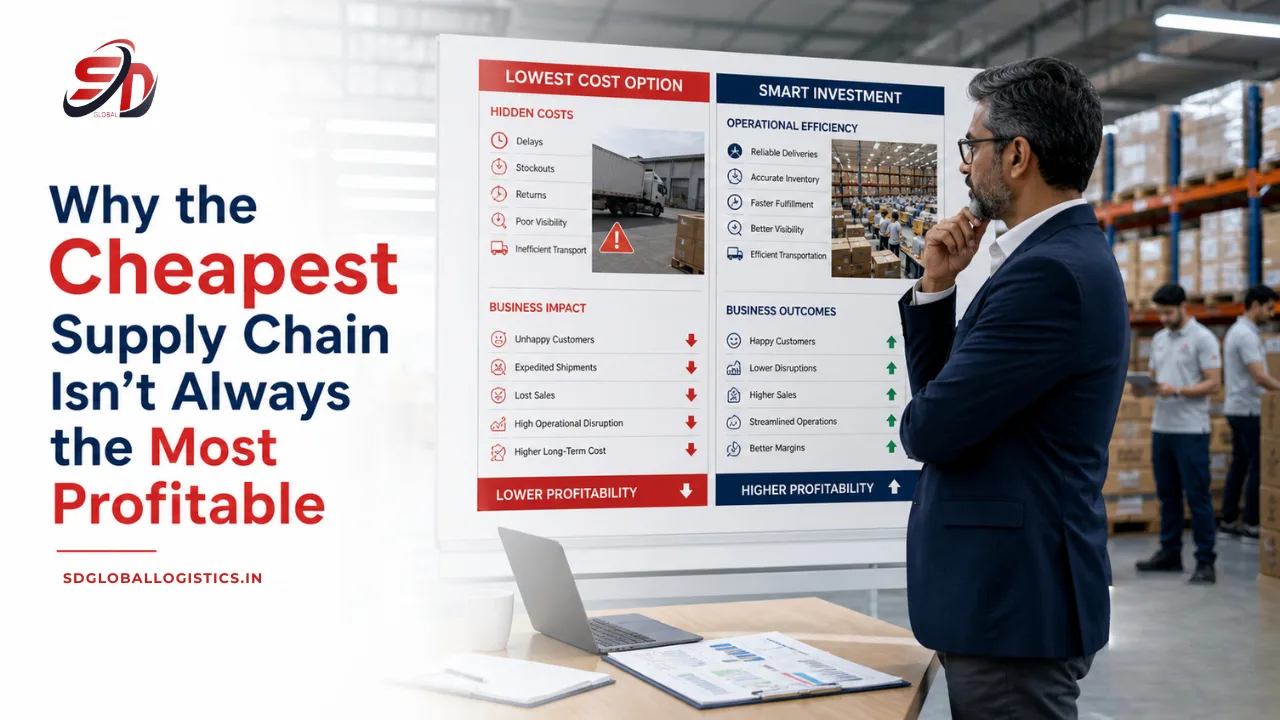
The cheapest supply chain is not always the most profitable — because cutting costs in one area almost always creates higher costs somewhere else. A low-cost warehouse in a remote location adds cos to transportation. The lower the wages, the more mistakes get made.
View Blog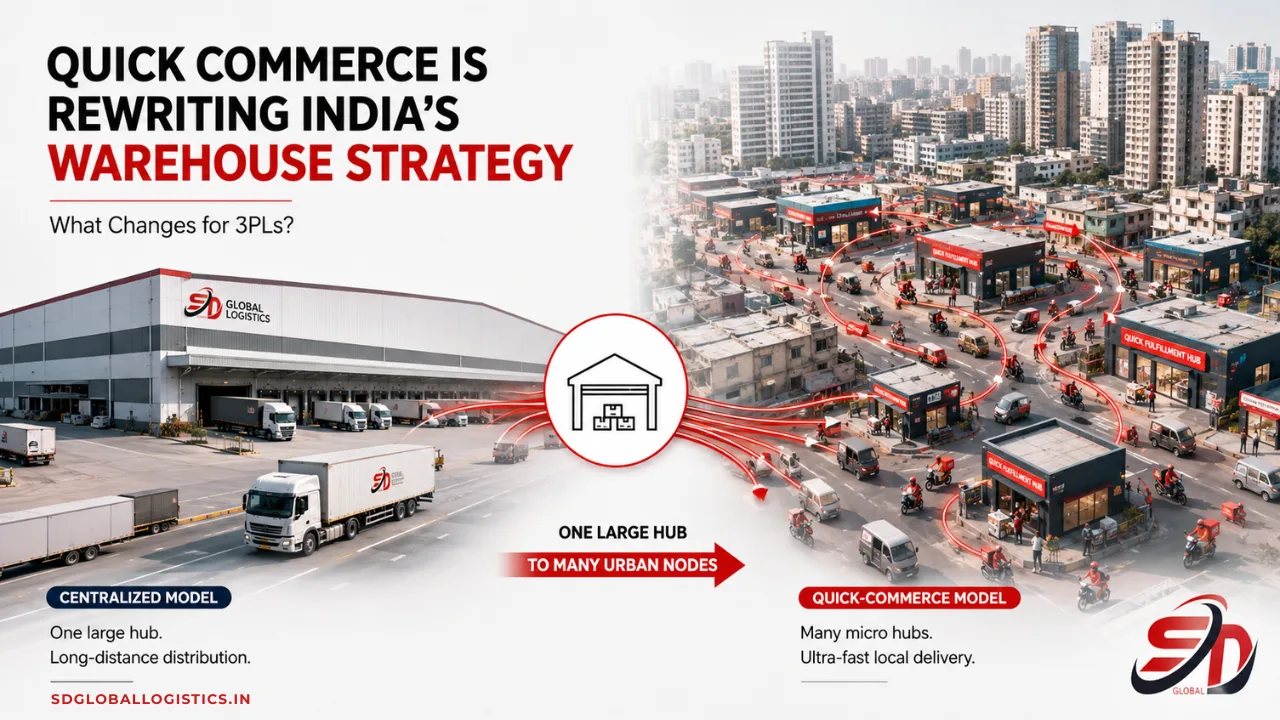
Quick commerce is pushing businesses away from centralised warehousing toward faster, more distributed fulfilment networks — and it is changing everything about how 3PLs manage inventory, locations....
View Blog75+ warehouse locations positioned across major industrial, commercial and distribution markets.
SD Global Logistics — your pan-India partner delivering scalable warehousing, technology-driven supply chain solutions and reliable, cost-efficient logistics for growing businesses
Developed By Rapiditors Technology India Pvt Ltd © 2025. All rights reserved.
Marcus
Ask me anything, I am here to help you.