

Marcus
Ask me anything, I am here to help you.
Enquiry Form
Enquiry Form
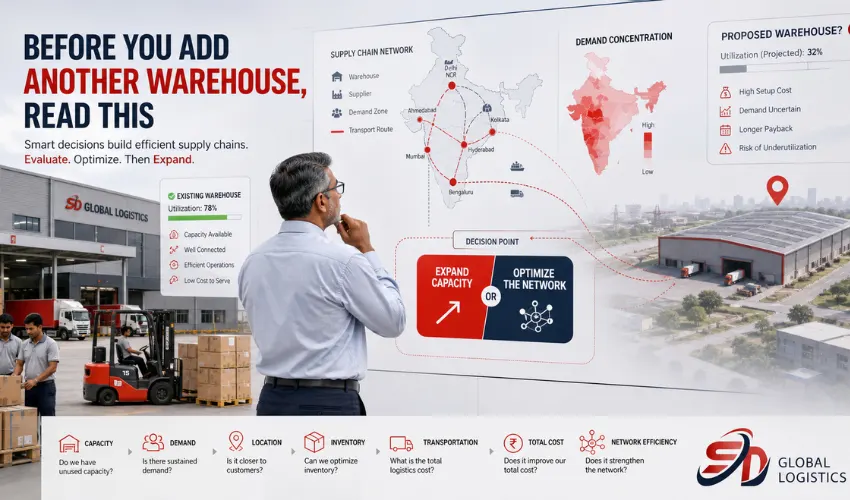
The answer is not always to build another warehouse. Before making a decision on an expansion, companies should look at true capacity utilization, inventory location, customer distribution, transportation costs, operational efficiency, and overall network expenses. Expansion can solve genuine problems — but it can also duplicate existing ones.
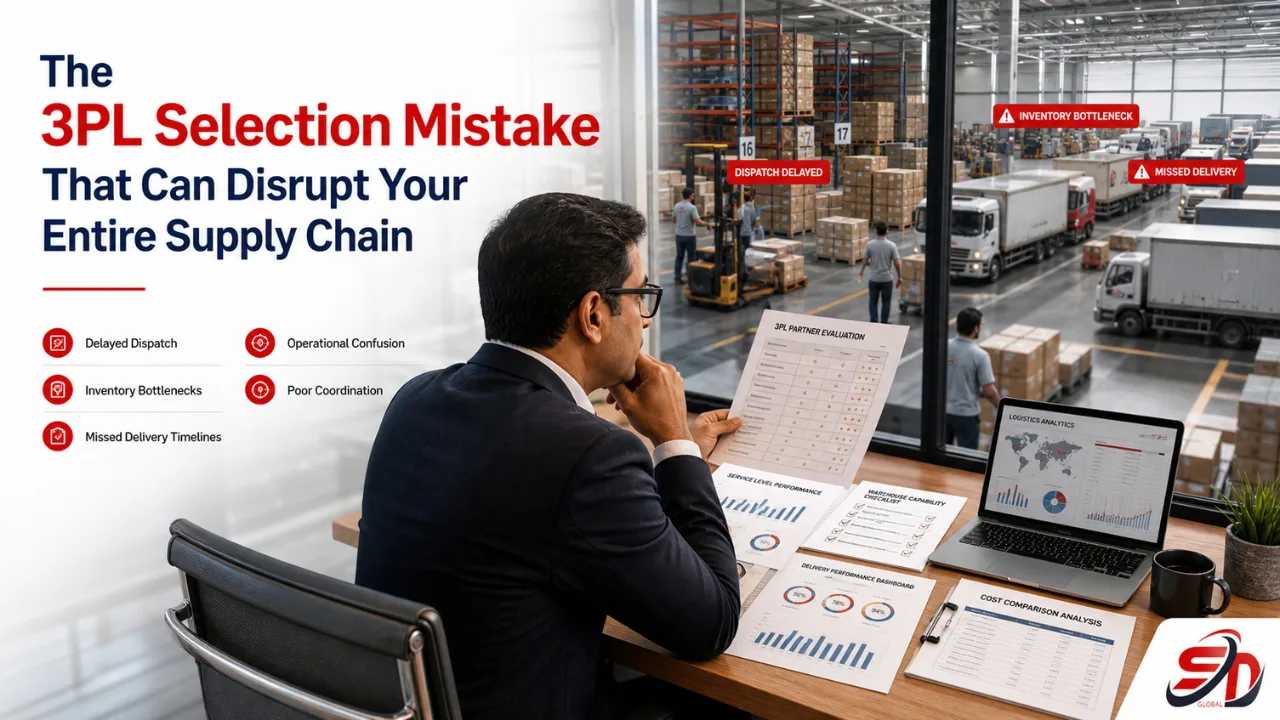
After a period of thoughtful growth, many businesses are returning to expansion—aiming for selective growth in key logistics corridors. But pressure to expand is not the same as a need to expand.
A warehouse can look full and still be significantly underperforming. Common reasons include:
There is an important difference between two numbers that many businesses confuse:
| Metric | What It Measures |
|---|---|
| Warehouse Occupancy | How full the building looks |
| Productive Capacity | How efficiently that space actually works |
Throughput matters as much as storage. A warehouse can store enough inventory but still fail to dispatch orders on time — that is a productivity problem, not a capacity problem.
Operational improvements can often unlock significant additional capacity within the same four walls.
Remove slow-moving and dead stock occupying space. Increase stock accuracy to minimize phantom stock and discrepancies.
Eliminate dead stock and reduce slow-moving inventory blocking space. Improve accuracy to reduce phantom stock.
Minimize travel time, picking errors, and pick zone congestion. Batch picking, zone picking, and wave planning boost throughput.
A warehouse management system gives real-time visibility into stock location, movement, and utilization rather than guesswork.
Eliminate unneeded double movements, as well as receiving and handling inefficiencies throughout the floor.
Warehouse expansion is also a network location decision — not just a space decision.
Before adding a facility, map your demand carefully:
The growing demand for faster delivery and the development of quick commerce services are changing storage needs in cities across India. This means that customer proximity is no longer a secondary consideration — it is a core part of warehouse network design.
A second warehouse may genuinely make sense when inventory needs to move significantly closer to a major demand cluster to improve both service levels and distribution economics.
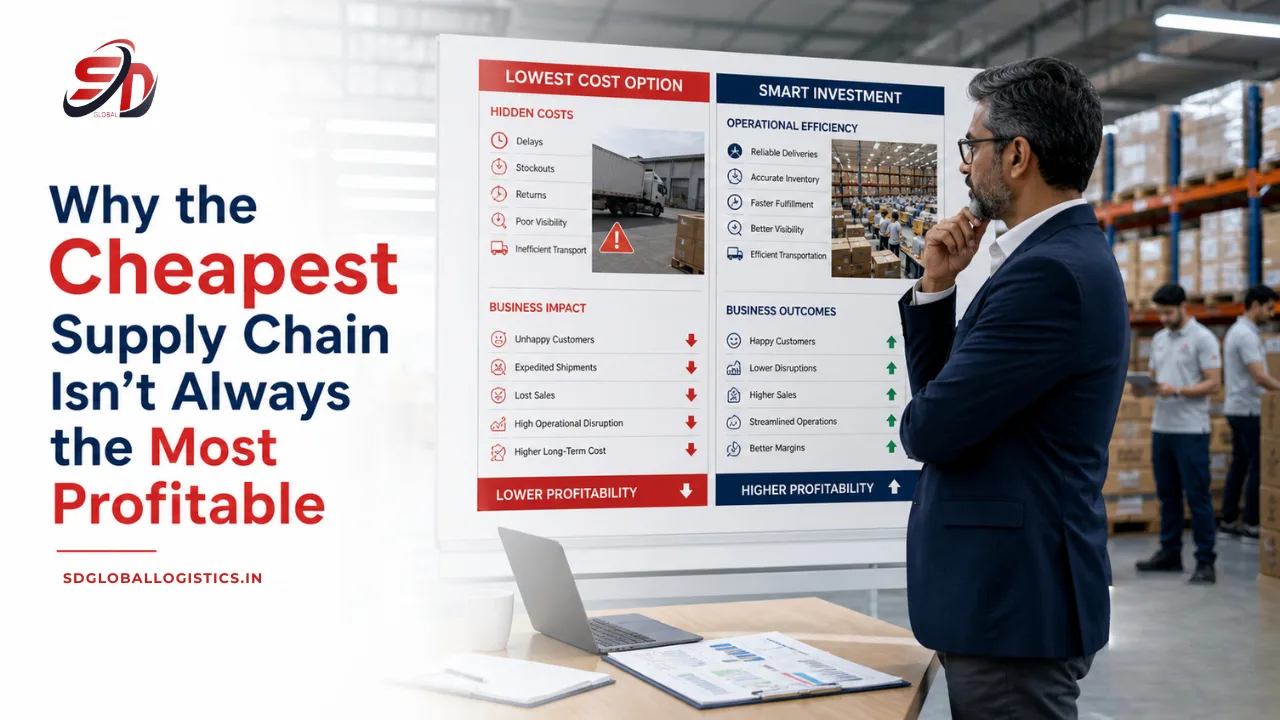
Rent is the first number most businesses look at. It should not be the only one.
This is a conceptual decision framework, not an accounting formula. Each business will weight these factors differently.
A second warehouse should improve total supply chain economics — not simply add storage capacity.
This is one of the most overlooked consequences of warehouse expansion, and it deserves serious attention.
When the same products are held across multiple locations, businesses often need to carry additional safety stock at each site to maintain service levels.
| Model | Inventory Implication |
|---|---|
| One warehouse | Consolidated inventory pool, lower safety stock |
| Two or more warehouses | Potential inventory duplication, higher working capital |
Multiple warehouses do not always increase total inventory. The actual impact depends entirely on network design, inventory policy, SKU velocity, and WMS capability. But the risk must be modelled before the decision is made.
Not every expansion is the wrong move. Here are the scenarios in which another warehouse can truly enhance your supply chain:
Businesses are likely to prioritize network efficiency, quicker delivery times, and technology-driven warehousing solutions, creating fresh demand in key logistics corridors. When all six factors above align, expansion can be the right call.
Before you sign a lease or begin a site search, check whether any of these warning signs apply:
Adding a second facility in this condition will not solve the underlying problem. It will simply duplicate it at a new postcode.
Do not scale an inefficient warehouse process into another building.
Use this process before committing to any expansion decision.
What specific problem is the new warehouse supposed to solve? Name it clearly.
What is current utilization, throughput, inventory accuracy, and operational performance?
Where are customers, orders, and regional demand actually concentrated?
What is the total cost of expansion — facility, network, inventory, and management?
Evaluate optimization, layout redesign, relocation, outsourcing, and multi-location options side by side.
Test the model against demand seasonality, future growth scenarios, and changing service expectations.
Businesses do not always need to establish and operate a new facility themselves. A 3PL warehouse partner can often provide what expansion is meant to deliver — without building the entire operation from scratch.
A capable 3PL can offer:
In India, multi-client 3PL models now comprise 45% of the large-format warehouse leasing market, with a clear focus on meeting seasonally volatile demand and increasing warehouse utilization to above 85%. It's a clear indicator that shared, flexible 3PL infrastructure is no longer the last resort, but a mainstream supply chain solution.
| Factor | Own Facility | 3PL Partnership |
|---|---|---|
| Capital Commitment | High | Low to variable |
| Flexibility | Low | High |
| Speed to Launch | Months | Weeks |
| Control | Full | Shared |
| Scalability | Fixed capacity | Demand-led |
| Model | Works Well When |
|---|---|
| Single Warehouse | Demand is concentrated, transportation costs are manageable, and service levels are being met |
| Two or More Warehouses | Regional demand is strong and proximity materially improves cost or service |
| Distributed Network | Customer geography and fulfillment expectations require multiple inventory positioning points |
More warehouses do not automatically mean better logistics.
Better operations
Higher profitability
Faster delivery
Work With SD Global Logistics on Your Warehouse Network Strategy
The question is never just: "Do we need another warehouse?" The right question is: "What does our supply chain actually need — and what is the most efficient way to deliver it?"
From growing businesses to established enterprises, companies rely on SD Global Logistics to manage critical warehousing and logistics operations.















" We struggled with inconsistent inventory handling until SD Global stepped in with dedicated warehousing and tight process control. Their attention to detail brought stability to our entire supply chain. "

" Reverse logistics was a major pain point for us. With SD Global’s reverse logistics management and WMS integration, we finally got the visibility and efficiency we needed. "

" As a growing startup, flexibility was key. SD Global’s on-demand warehousing and responsive support scaled with us without locking us into rigid contracts. "

" Order delays used to slow us down. Thanks to SD Global’s order fulfillment and B2B logistics, we’re now running faster and more reliably than ever. "

" Our nationwide expansion needed a reliable network. SD Global’s Pan-India 3PL and shared warehousing model gave us the reach and agility we were missing. "

The answer is not always to build another warehouse. Before making a decision on an expansion, companies should look at true capacity utilization, inventory location, customer distribution, transportation costs, operational efficiency....
View Blog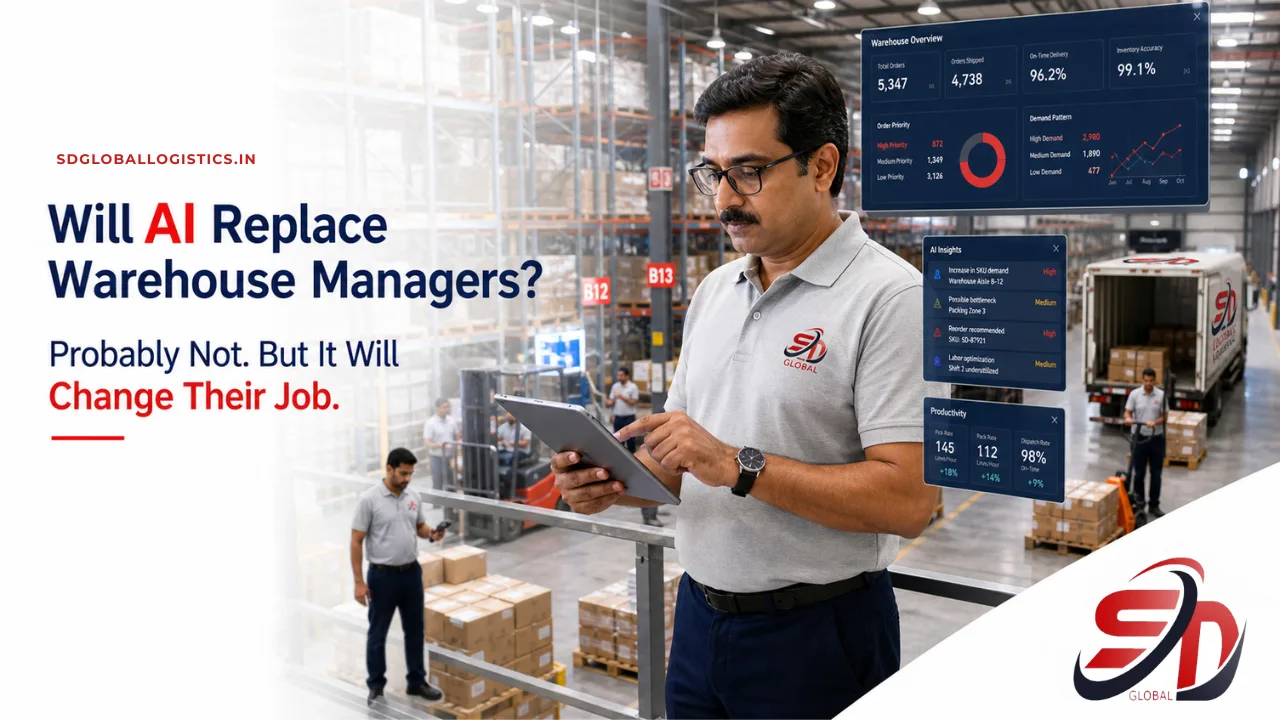
Warehouse managers will not be replaced by AI. Human judgment, leadership, exception handling and real-time coordination are still required in warehouses.But AI will be making more routine decisions — and get managers in the habit of data-driven management....
View Blog
The most common error that companies make when choosing a 3PL is simply looking at the cost or warehouse capacity without assessing operational capability, technology, network, scalability, service levels and supply chain impact.
View Blog75+ warehouse locations positioned across major industrial, commercial and distribution markets.
Marcus
Ask me anything, I am here to help you.