

Marcus
Ask me anything, I am here to help you.
Enquiry Form
Enquiry Form
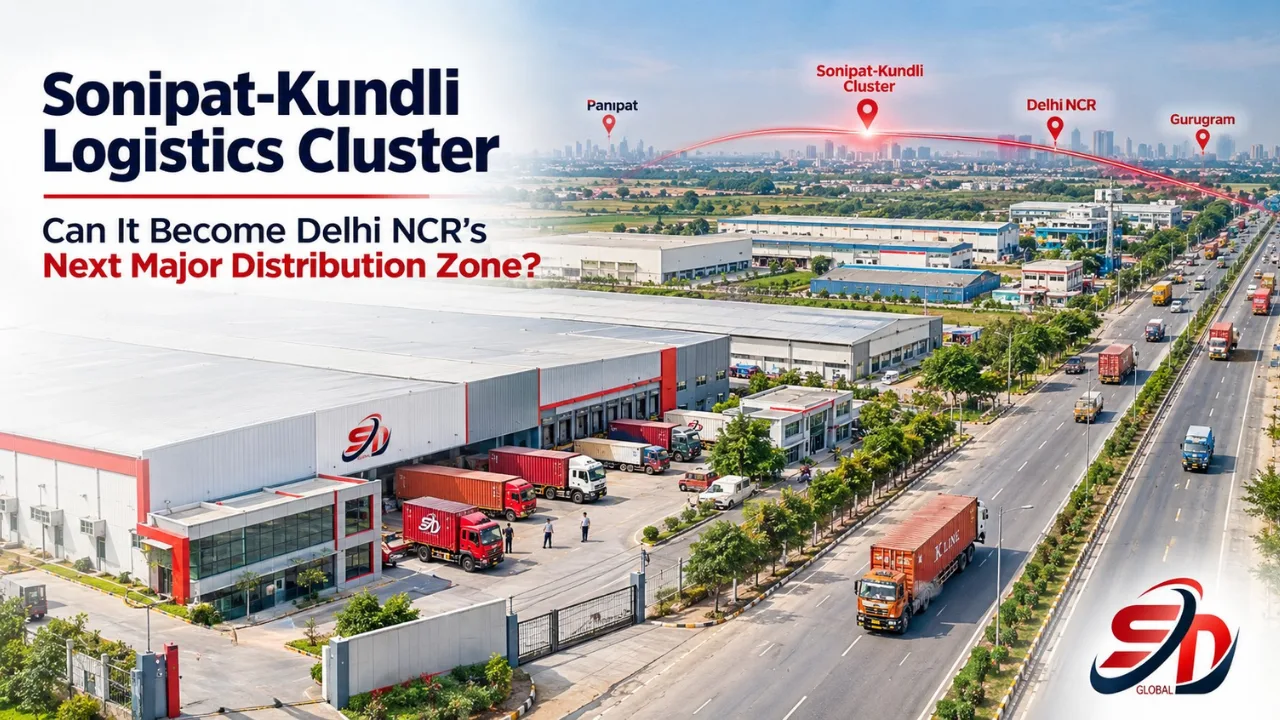
The Sonipat-Kundli logistics cluster is located in the northern part of Delhi NCR, about 40-50 km from central Delhi. It offers direct NH-44 connectivity, Kundli-Manesar-Palwal (KMP) Expressway and an emerging industrial hub and is a rapidly becoming a viable choice for warehousing in Sonipat and regional distribution in North India.
Kundli Industrial Area is one of the most active planned industrial areas in the northern NCR belt developed by HSIIDC with Industrial plots, Manufacturing units and Logistics facilities. The real interest of this cluster is not one factor alone, but rather the combination of factors that make it logistically interesting.
Sonipat is located in the National Capital Region, and is about 44 kilometres from the centre of Delhi, which is close enough to be connected to the consumer market of Delhi, but far enough to avoid the cost of land in Delhi and the restriction on truck movement in the inner city. That combination alone is what draws early-mover warehousing operators to evaluate logistics in Sonipat as a real option.
NH-44 is India's longest national highway, stretching 4,113 kilometres from Srinagar to Kanyakumari. For a logistics hub in Sonipat, this northbound reach is the defining value proposition — not just the highway itself, but the physical upgrades it has received in recent years.
Here is what that means practically for freight:
For businesses targeting Punjab, Haryana, Himachal Pradesh, and J&K from a distribution hub in Delhi NCR, this is a material freight cost and transit time advantage that the Gurugram or Noida corridors simply cannot replicate at the same northbound efficiency.
Trucks and heavy commercial vehicles from Punjab to Rajasthan or UP to Haryana had no way to bypass Delhi and were made to use its internal road network, leading to congestion, pollution, accidents, and worsening urban gridlock. The KMP Expressway is the solution from the west.
Here is a fact-based breakdown of why it matters for logistics in Kundli:
For ecommerce fulfillment, FMCG distribution, and B2B fulfillment operators evaluating NCR nodes, the KMP bypass reduces both transit time and fuel cost on cross-NCR routes — a real operating cost variable, not just a map advantage.
The Urban Extension Road-II (UER-II), officially designated as NH-344M, was inaugurated on 17 August 2025. This 75.7 km access-controlled expressway starts from NH-44 at Alipur, runs through Rohini, Mundka, Najafgarh, and Dwarka, and terminates near IGI Airport at Mahipalpur.
For this cluster specifically, UER-II integrates a 29.6 km four-lane Bawana–Sonipat spur — directly improving freight access from the Sonipat-Kundli belt — and a 7.3 km Najafgarh–Bahadurgarh spur connecting to the KMP Expressway. Businesses evaluating warehousing services in Sonipat should factor UER-II into their last-mile and cross-NCR freight calculations today, not as a future projection.
The HORC is the project most likely to change the long-term competitive ceiling of this cluster. Here are the verified facts, separated clearly from projections:
Treat HORC as future upside — not a current operational advantage. The road infrastructure is what businesses can act on today.
| Business Type | Fit | Key Reason |
|---|---|---|
| FMCG and Consumer Goods | Strong | North India reach via NH-44 |
| Ecommerce Fulfillment | Strong | NCR proximity and lower land cost |
| Auto Components | Strong | Industrial base and highway access |
| B2B Retail Distribution | Moderate–Strong | Multi-state northbound delivery |
| Cold Chain and Agri | Moderate | Cold storage exists; infrastructure improving |
| Import-Dependent Goods | Limited | No port access; inland ICD dependency |
Ecommerce fulfillment operators should note that same-day delivery to South Delhi or Noida depends on last-mile carrier network density, not just warehouse location. Customer concentration mapping matters more than highway proximity alone
A logistics hub in Kundli is most strategically suited for businesses looking for 3PL warehousing and supply chain solutions in Punjab, Haryana and Himachal Pradesh.
Grade-A warehouse supply in Sonipat-Kundli remains limited compared to mature NCR zones like Gurugram or Noida. Businesses running high-frequency
reverse logistics operations need to audit actual carrier density at the micro-location level — not just highway access on a map.
Inventory management infrastructure, cold chain assets, and packaging vendor ecosystems exist in the Kundli-Rai-Barhi belt but are thinner than competing zones. If manufacturing investment slows, ancillary demand for contract warehousing would feel that impact directly.
Not yet on equal terms — but the competition is not direct. Gurugram and Noida command premium rents, deeper Grade-A warehouse supply, and more mature 3PL ecosystems. Sonipat-Kundli's realistic competitive positioning is northbound distribution services — not the same businesses that Noida's east-facing ecommerce clusters or Gurugram's south-facing transportation services corridors serve.
Businesses currently serving North India from Gurugram or Noida, and facing high freight costs to Punjab and Haryana markets, should seriously evaluate whether a secondary distribution center in Delhi NCR's northern edge makes operational sense.
The Sonipat-Kundli logistics cluster is best evaluated as an emerging regional North India distribution hub — not yet a pan-India play. UER-II is operational. The KMP Expressway bypass is proven. NH-44 upgrades are delivering real transit time reductions today.
HORC, targeting 2028 completion, is what would shift this cluster into genuine Pan-India distribution territory by adding multimodal rail-freight connectivity. Until then, the strongest business case remains northbound regional distribution — FMCG, auto components,
ecommerce fulfillment for Delhi and Haryana, and warehousing services in Sonipat at lower NCR land costs.
Smart operators will position early — but with clear eyes on what the location delivers today versus what it may deliver post-2028.
From growing businesses to established enterprises, companies rely on SD Global Logistics to manage critical warehousing and logistics operations.










" We struggled with inconsistent inventory handling until SD Global stepped in with dedicated warehousing and tight process control. Their attention to detail brought stability to our entire supply chain. "
" Reverse logistics was a major pain point for us. With SD Global’s reverse logistics management and WMS integration, we finally got the visibility and efficiency we needed. "
" As a growing startup, flexibility was key. SD Global’s on-demand warehousing and responsive support scaled with us without locking us into rigid contracts. "
" Order delays used to slow us down. Thanks to SD Global’s order fulfillment and B2B logistics, we’re now running faster and more reliably than ever. "

" Our nationwide expansion needed a reliable network. SD Global’s Pan-India 3PL and shared warehousing model gave us the reach and agility we were missing. "
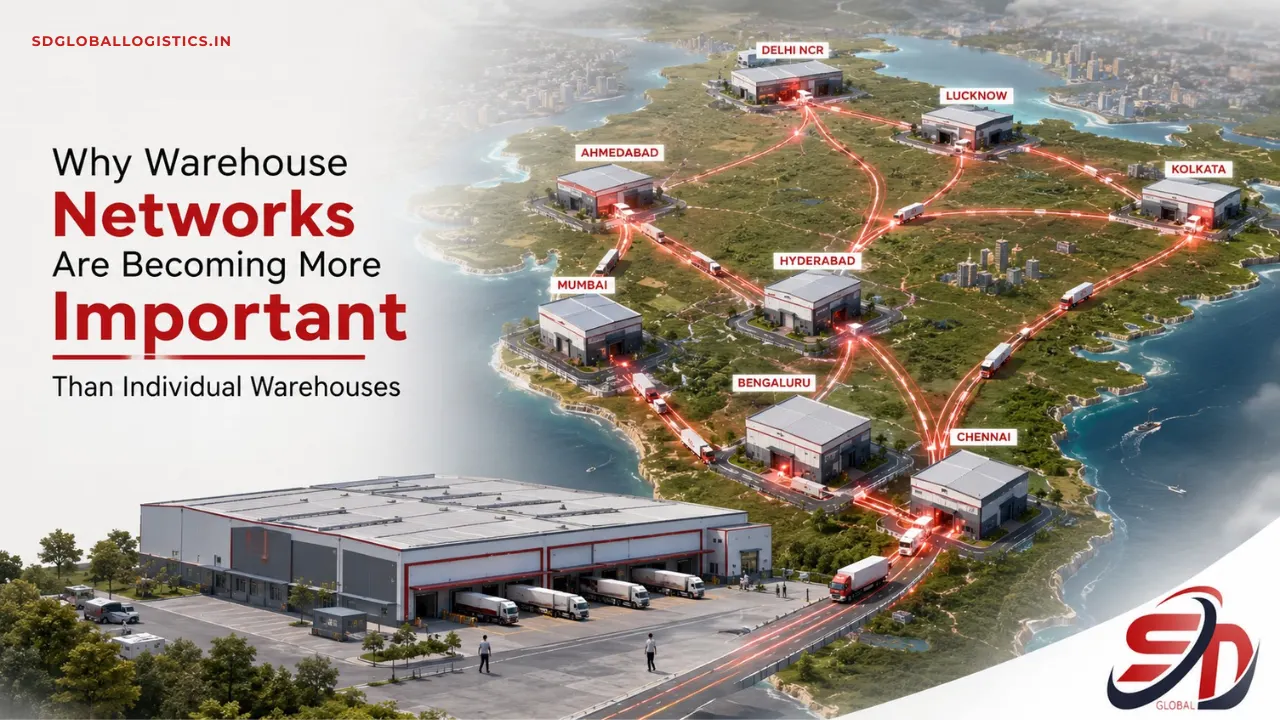

The Core Shift: A warehouse network provides businesses with the ability to locate stock closer to several customer and demand centres, optimising the delivery process, minimising long-distance....
View Blog
The Sonipat-Kundli logistics cluster is best evaluated as an emerging regional North India distribution hub — not yet a pan-India play. UER-II is operational.The KMP Expressway bypass is proven....
View Blog
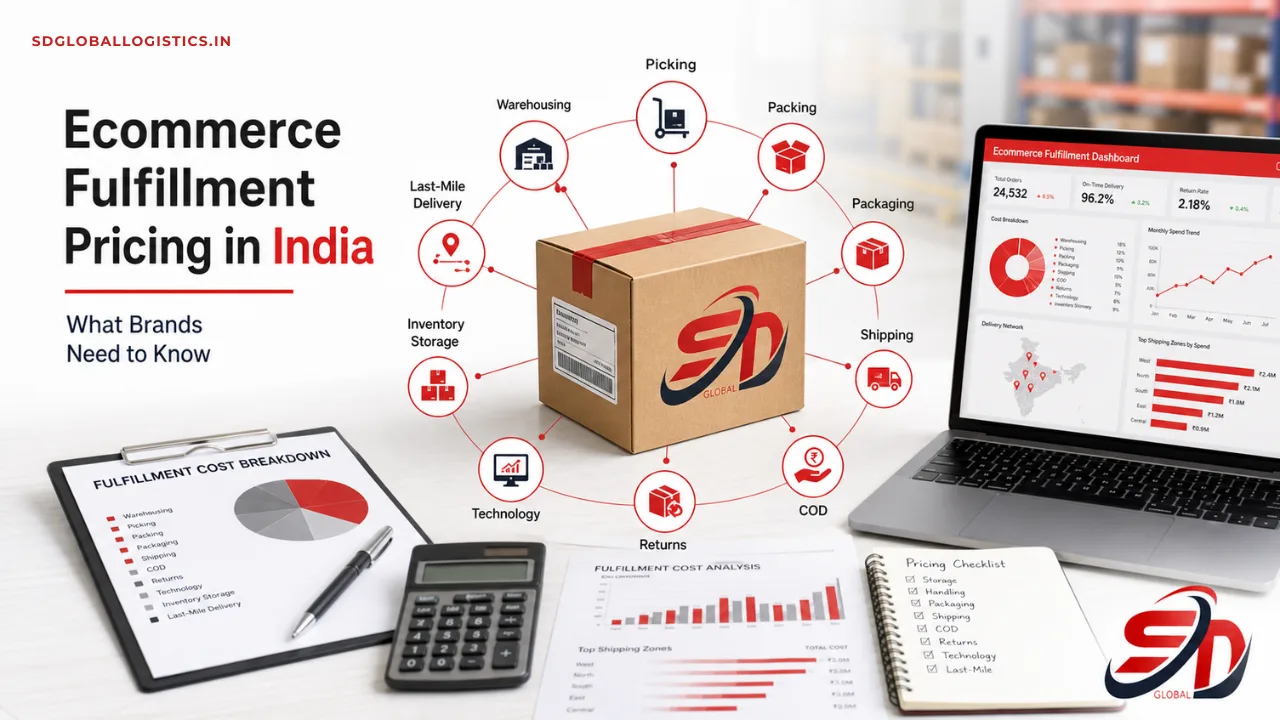
Ecommerce fulfillment pricing in India rewards brands that model their real order profile — COD share, average weight, box dimensions, and delivery zones — before signing anything. The cheapest pick-and-pack rate rarely wins once RTO, volumetric weight ....
View Blog
75+ warehouse locations positioned across major industrial, commercial and distribution markets.
SD Global Logistics — your pan-India partner delivering scalable warehousing, technology-driven supply chain solutions and reliable, cost-efficient logistics for growing businesses
Developed By Rapiditors Technology India Pvt Ltd © 2025. All rights reserved.
Marcus
Ask me anything, I am here to help you.