

Marcus
Ask me anything, I am here to help you.
Enquiry Form
Enquiry Form
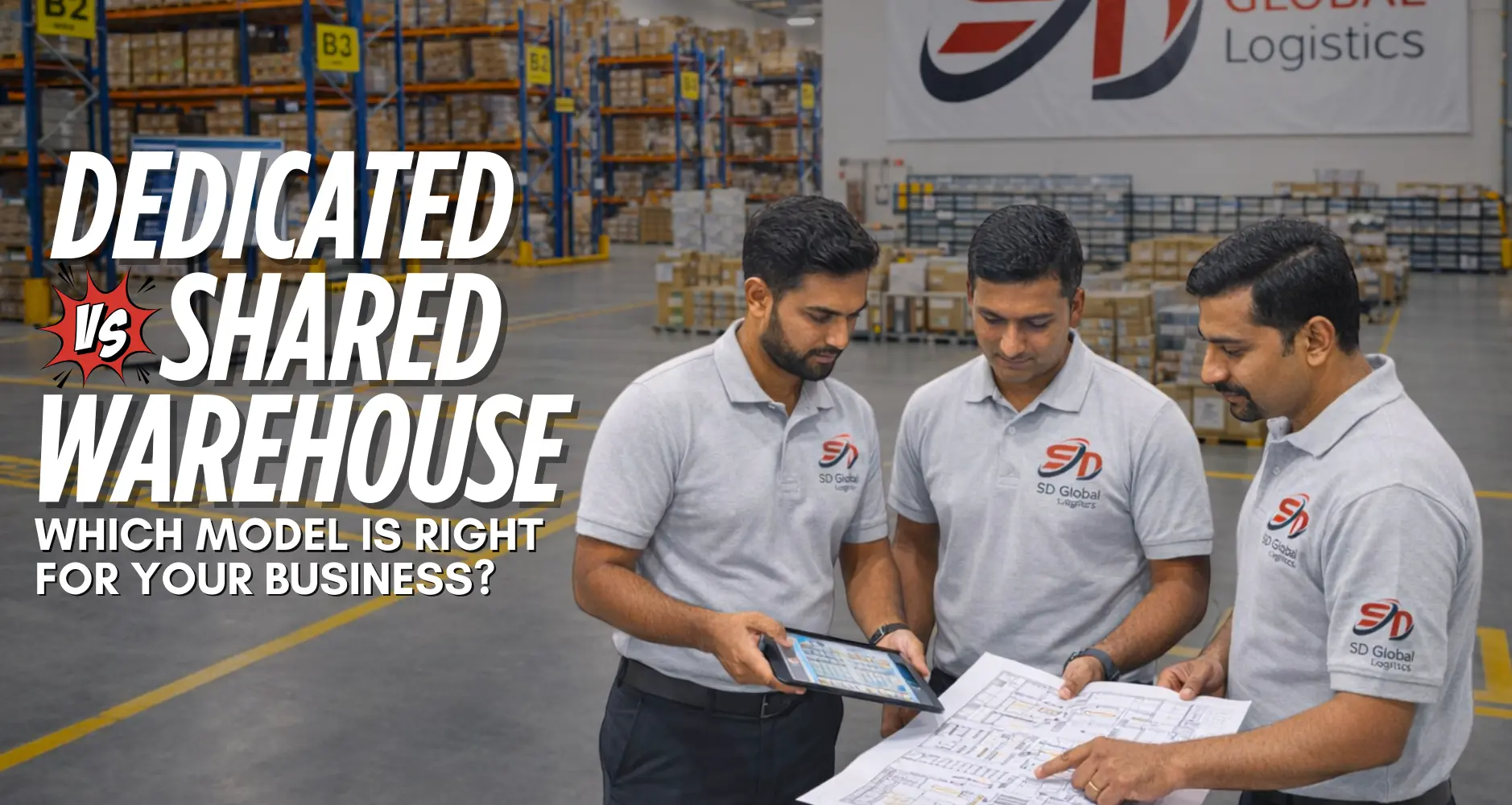
The warehouse is no longer a mere storage facility to the business scaling within the Indian landscape, it is the life blood of the supply chain. Whether you are a fast-growing D2C brand, a heavy-machinery manufacturer, or a high-volume importer, the decision between a dedicated warehouse and a shared warehouse will dictate your operational agility, customer satisfaction, and, ultimately, your bottom line.
At SD Global Logistics India, we are witnessing first-hand how the appropriate model of warehousing can make a company change its cost structure. This guide is a breakdown of the working details of the two models to assist you to make a clear, data-driven decision regarding your 3PL services in India.
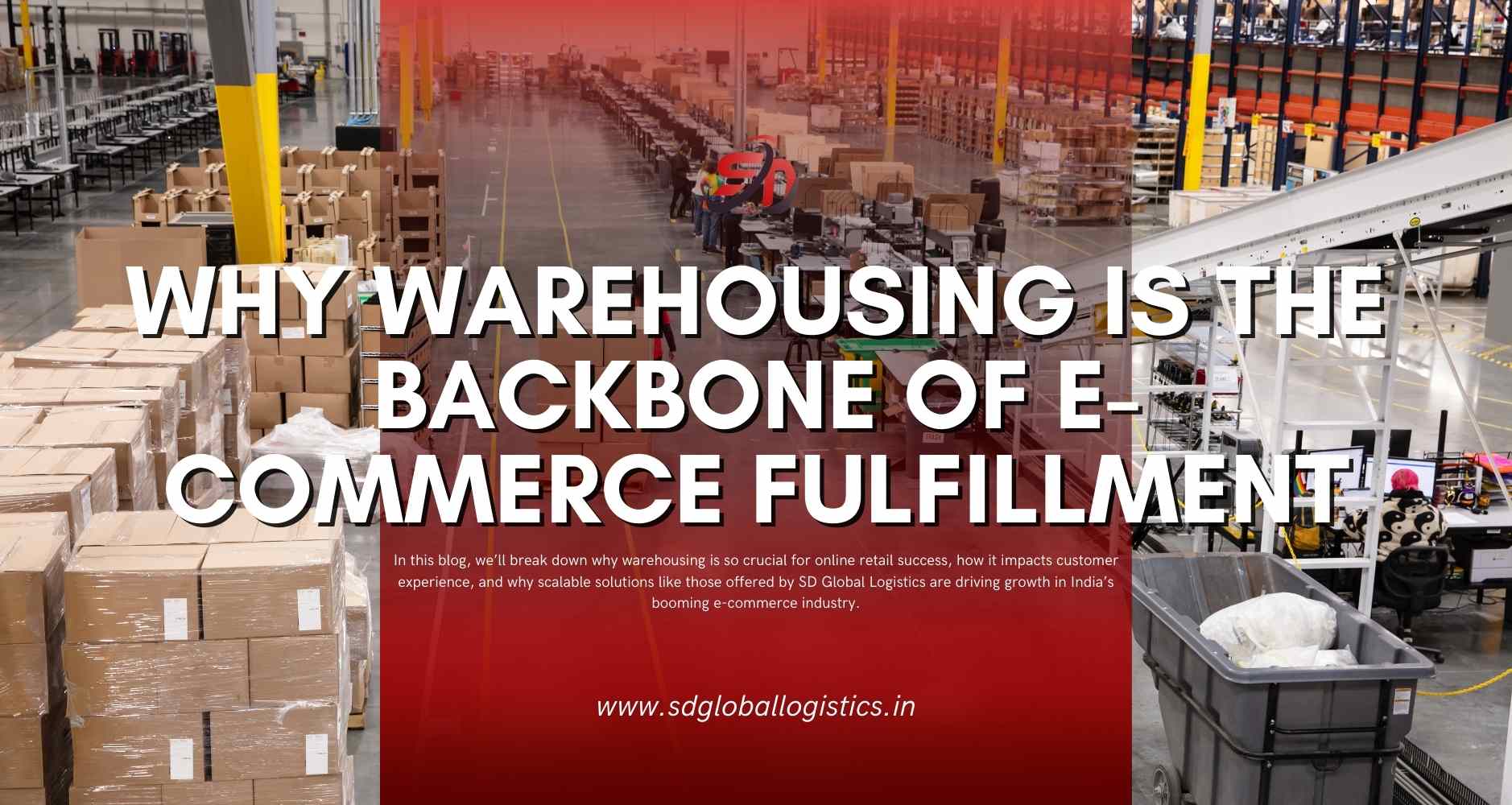
Dedicated warehousing (often referred to as contract warehousing) is a long-term commitment where a facility, its infrastructure, and its personnel are reserved exclusively for one client.
Operational Advantages:Also known as a multi-client warehouse, the shared model involves multiple brands occupying space within a single 3PL facility. You just pay per pallet positions, square feet, and labor that you utilize.
Operational Advantages:| Feature | Dedicated Warehouse | Shared (Multi-client) Warehouse |
|---|---|---|
| Cost Structure | Fixed (Lease + Management Fee) | Variable (Pay-per-use) |
| Control | Absolute control over SOPs | Shared SOPs with customization |
| Scalability | Limited by physical building size | Highly flexible and immediate |
| Technology | Bespoke WMS integration | Standardized, robust 3PL WMS |
| Best Use Case | Consistent, high-volume B2B | Seasonal, volatile B2C/D2C |
When selecting warehousing services in India, general global logic must be tempered with local realities:
GST Impact: Post-GST, the focus has shifted from "tax-saving" warehouses to "strategic" hubs. Your warehouse, be it dedicated or shared must be close to major consumption centers or ports in order to reduce secondary freight costs.
Tech-Enabled Operations: Regardless of the model, ensure your partner uses a modern Warehouse Management System (WMS). In a fragmented market like India, real-time data is the only way to prevent stockouts and overstocking.
Labor Management: India’s labor laws and seasonal migration can disrupt operations. A third party logistics company like SD Global Logistics manages the labor risk, ensuring your 24/7 operations never stall.
The decision between dedicated and shared warehousing does not happen once. It is possible that your model should change as your business develops.
SD Global Logistics India provides the bridge between these two worlds. We offer:
Strategic Footprint: Tier-1 and Tier-2 city presence to bring your inventory closer to the end consumer.
Omnichannel Expertise: Seamlessly managing B2B warehousing services alongside high-velocity B2C fulfillment services.
Advanced Inventory Management: Our tech stack provides end-to-end visibility, ensuring your supply chain optimization goals are met with precision.
Operational Transparency: No hidden costs, just reliable, scalable logistics.
Choose a Dedicated Warehouse if: You have predictable, high-volume demand and require specialized handling that a general facility cannot provide. It is an investment in long-term stability and brand-specific precision.
Choose a Shared Warehouse if: You are a growing brand, face seasonal peaks, or want to test new markets without the risk of long-term leases. It offers the ultimate logistics cost reduction for businesses focused on agility.
Don’t let inefficient warehousing stall your growth. Whether you need a massive contract warehousing setup or a nimble e-commerce fulfillment solution, SD Global Logistics has the infrastructure and expertise to deliver.
Contact SD Global Logistics India now and have a tailor-made warehouse feasibility study and make the initial step toward smarter supply chain.
From growing businesses to established enterprises, companies rely on SD Global Logistics to manage critical warehousing and logistics operations.













" We struggled with inconsistent inventory handling until SD Global stepped in with dedicated warehousing and tight process control. Their attention to detail brought stability to our entire supply chain. "

" Reverse logistics was a major pain point for us. With SD Global’s reverse logistics management and WMS integration, we finally got the visibility and efficiency we needed. "

" As a growing startup, flexibility was key. SD Global’s on-demand warehousing and responsive support scaled with us without locking us into rigid contracts. "

" Order delays used to slow us down. Thanks to SD Global’s order fulfillment and B2B logistics, we’re now running faster and more reliably than ever. "

" Our nationwide expansion needed a reliable network. SD Global’s Pan-India 3PL and shared warehousing model gave us the reach and agility we were missing. "
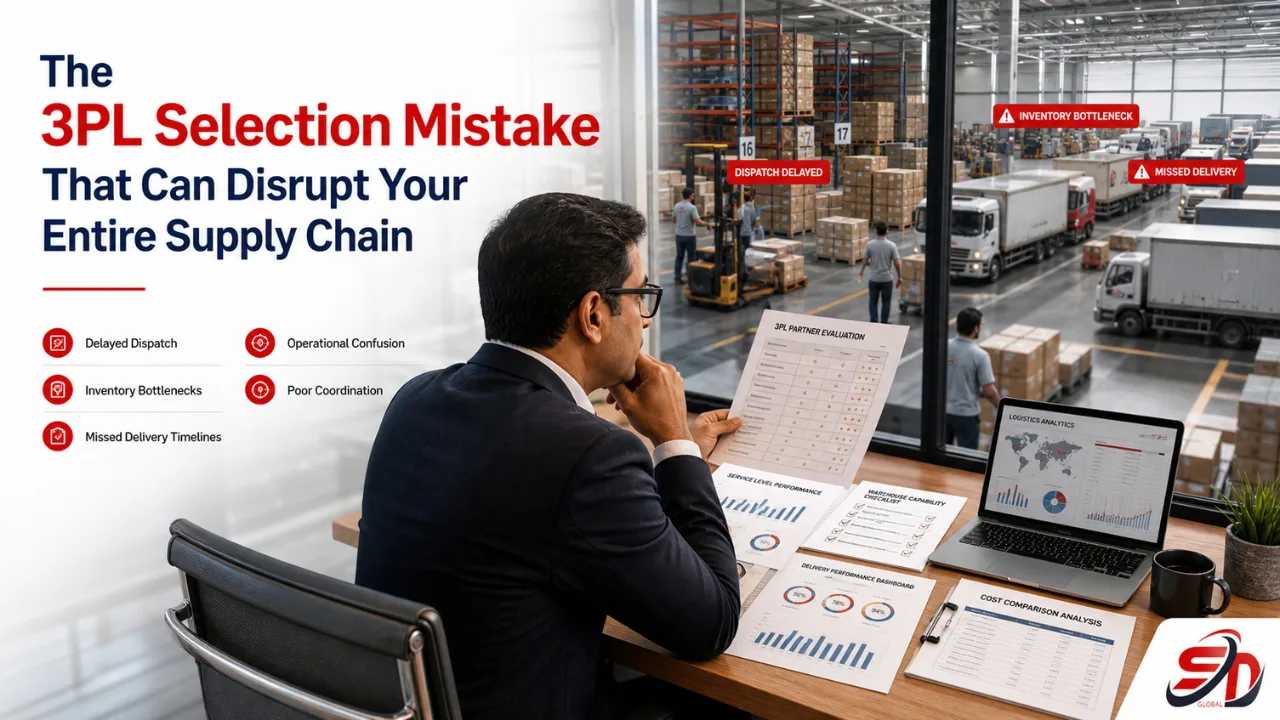

The most common error that companies make when choosing a 3PL is simply looking at the cost or warehouse capacity without assessing operational capability, technology, network, scalability, service levels and supply chain impact.
View Blog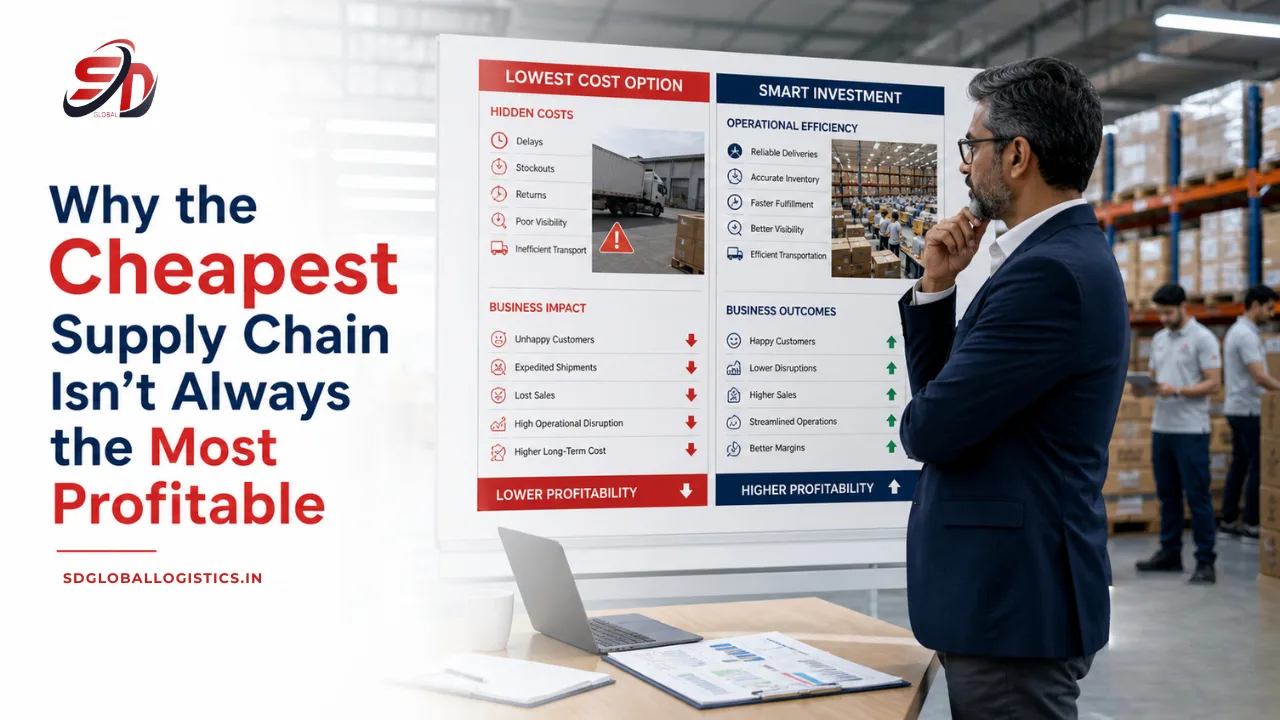
The cheapest supply chain is not always the most profitable — because cutting costs in one area almost always creates higher costs somewhere else. A low-cost warehouse in a remote location adds cos to transportation. The lower the wages, the more mistakes get made.
View Blog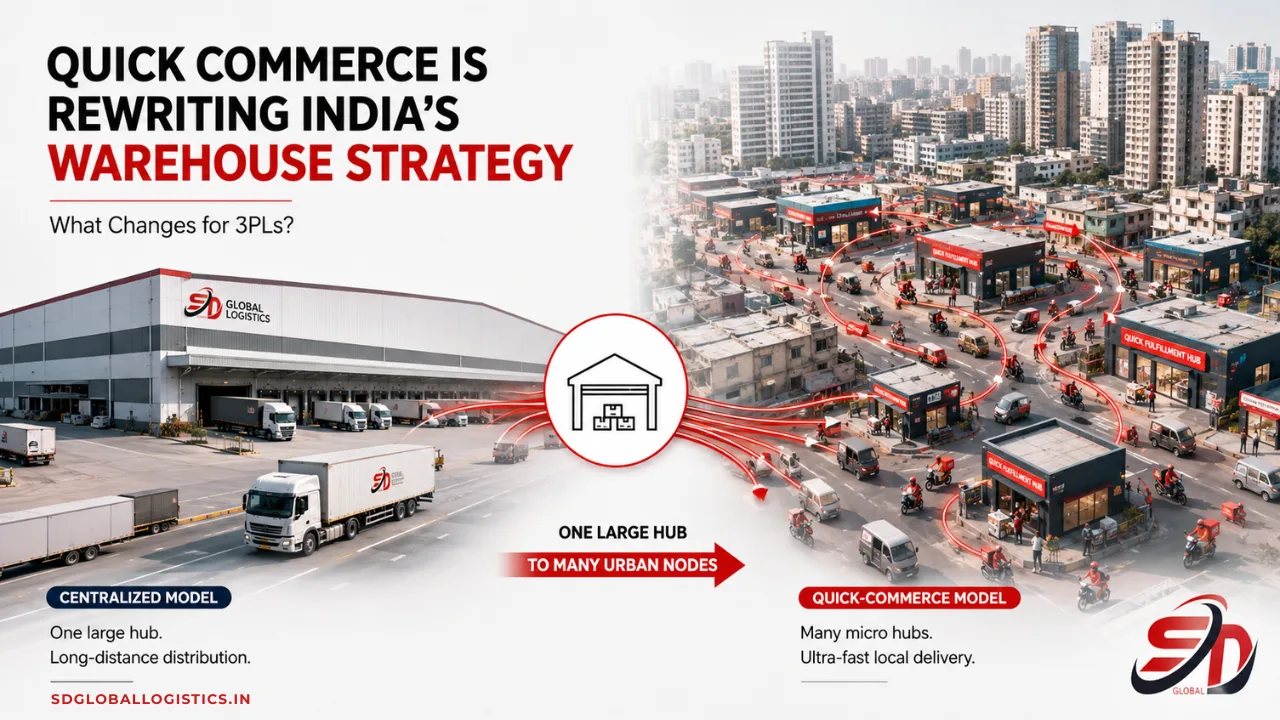
Quick commerce is pushing businesses away from centralised warehousing toward faster, more distributed fulfilment networks — and it is changing everything about how 3PLs manage inventory, locations....
View Blog75+ warehouse locations positioned across major industrial, commercial and distribution markets.
SD Global Logistics — your pan-India partner delivering scalable warehousing, technology-driven supply chain solutions and reliable, cost-efficient logistics for growing businesses
Developed By Rapiditors Technology India Pvt Ltd © 2025. All rights reserved.
Marcus
Ask me anything, I am here to help you.