

Marcus
Ask me anything, I am here to help you.
Enquiry Form
Enquiry Form
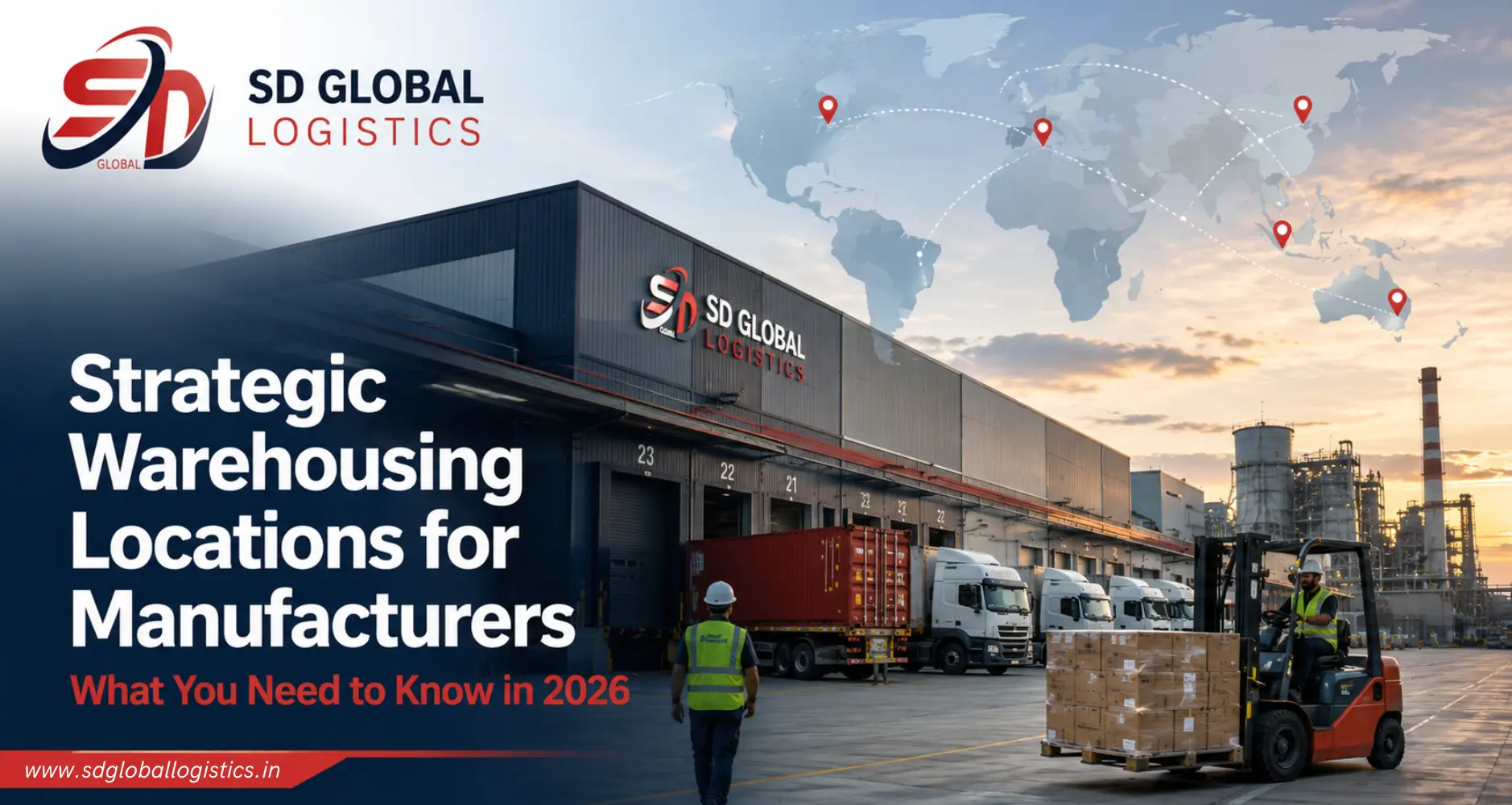
The place you choose to store your goods plays an equally vital role as what goods you manufacture. Manufacturers functioning in markets that are moving at a breakneck speed today that the wrong warehouse location choice leads to a combination of slower deliveries, higher freight costs, and missing out on growth opportunities.
By 2026, companies will be turning to strategically located warehouses, quick order processing, and delivery networks enhanced by technology in order to achieve reliable and cost-effective fulfillment at a larger scale. For manufacturers, this change is not just a matter of choice — on the contrary, it is a necessity for survival and competitiveness.
This guide will help you figure out the reasons why choosing warehousing locations strategically is very important, what aspects are significant in an evolving India, and how to opt for a partner able to back up your growth ambitions.
The single biggest focus of most manufacturers will be on production efficiency. But once the goods leave the factory floor, a different set of decisions takes over — and warehouse location is one of the biggest.
Approximately 70% of the issues that cause delays in the supply chain stem from warehousing, so the importance of picking the right partner cannot be overstated as it impacts everything from your cost structure to your customer experience. A strategically located warehouse reduces time and costs allocated to transportation, which are both necessary components for efficient logistics management.
Once your warehouse is near key customer markets or major transportation routes, you've immediately gained a significant advantage: not only will the delivery lead time be shorter but the last-mile delivery cost will also be lower, and overall, you will be more capable of quickly catching up with the demand changes. Fulfillment centers, in fact, are going to the lengths of getting themselves closer and closer to consumption centers due to the reduction of the delivery time windows. Manufacturers who align their warehousing with this reality will find it much easier to compete on speed and service.
Getting your warehouse location right unlocks real, measurable advantages across your entire operation.
The industrial warehousing market in India is changing its structure. The country's warehousing sector recorded a 29% year-on-year growth in 2025, reaching 72.5 million sq ft — with the manufacturing sector alone accounting for 47% of total space absorption. Where to warehouse is now more strategic for manufacturers.
The average rental price in the leading cities of India varies from ₹18–₹31/sq ft/month with city, facility grade, port access, and lease duration. Here's a city-by-city breakdown to help manufacturers make data-backed decisions.
For manufacturers, strategic warehousing locations are not a back-office concern — they're a growth lever. The right warehouse in the right place means lower costs, faster deliveries, and a supply chain that can keep up with demand.
Businesses that align their warehousing strategy with long-term growth goals today will be the ones that scale faster, operate leaner, and win customer loyalty tomorrow.
At SD Global Logistics, we support the supply chain needs of manufacturers throughout the key industrial and commercial hubs of India. Whether you require only one strategically located warehouse or an entire multi-city distribution network, our team is ready to help you build a warehousing setup that works as hard as you do.
From growing businesses to established enterprises, companies rely on SD Global Logistics to manage critical warehousing and logistics operations.















" We struggled with inconsistent inventory handling until SD Global stepped in with dedicated warehousing and tight process control. Their attention to detail brought stability to our entire supply chain. "

" Reverse logistics was a major pain point for us. With SD Global’s reverse logistics management and WMS integration, we finally got the visibility and efficiency we needed. "

" As a growing startup, flexibility was key. SD Global’s on-demand warehousing and responsive support scaled with us without locking us into rigid contracts. "

" Order delays used to slow us down. Thanks to SD Global’s order fulfillment and B2B logistics, we’re now running faster and more reliably than ever. "

" Our nationwide expansion needed a reliable network. SD Global’s Pan-India 3PL and shared warehousing model gave us the reach and agility we were missing. "
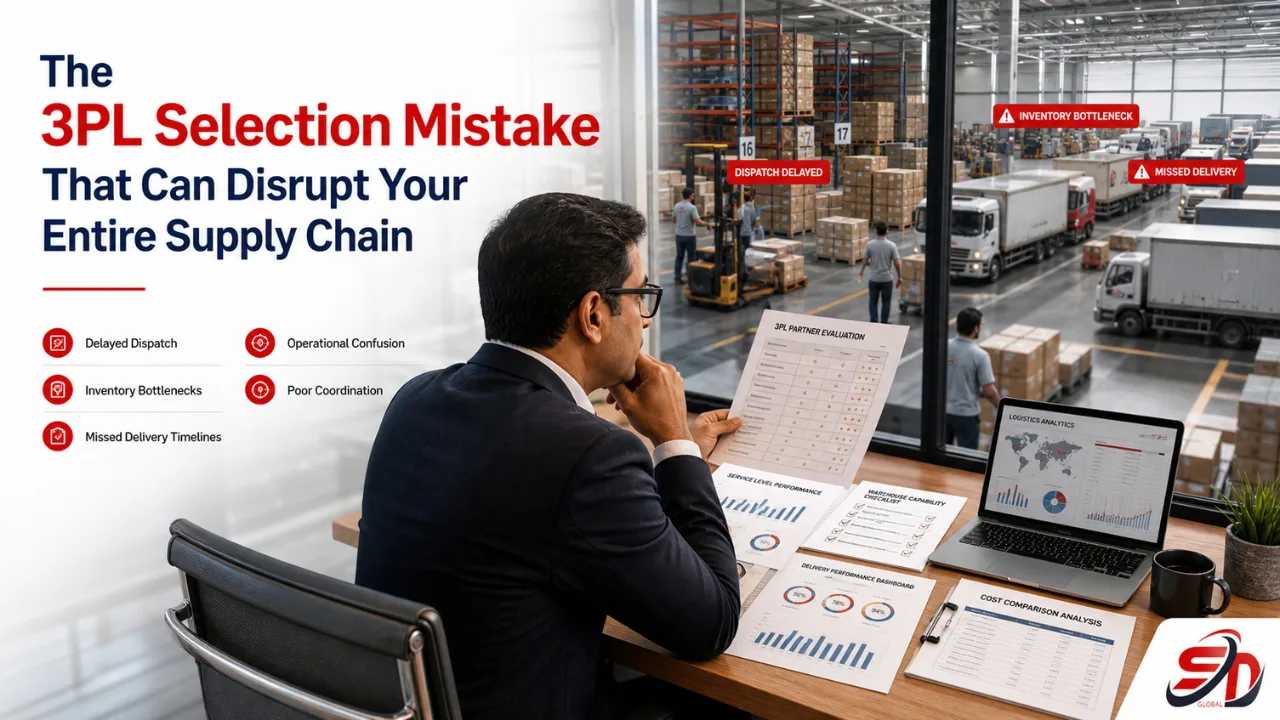

The most common error that companies make when choosing a 3PL is simply looking at the cost or warehouse capacity without assessing operational capability, technology, network, scalability, service levels and supply chain impact.
View Blog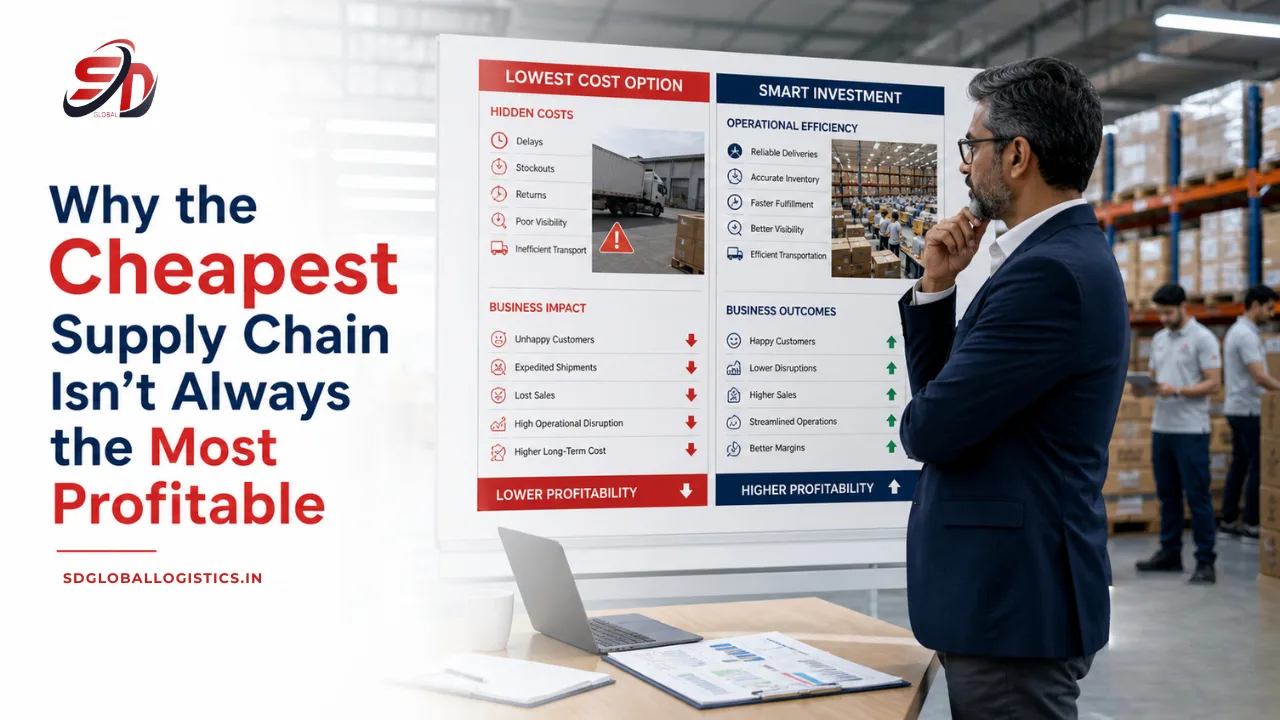
The cheapest supply chain is not always the most profitable — because cutting costs in one area almost always creates higher costs somewhere else. A low-cost warehouse in a remote location adds cos to transportation. The lower the wages, the more mistakes get made.
View Blog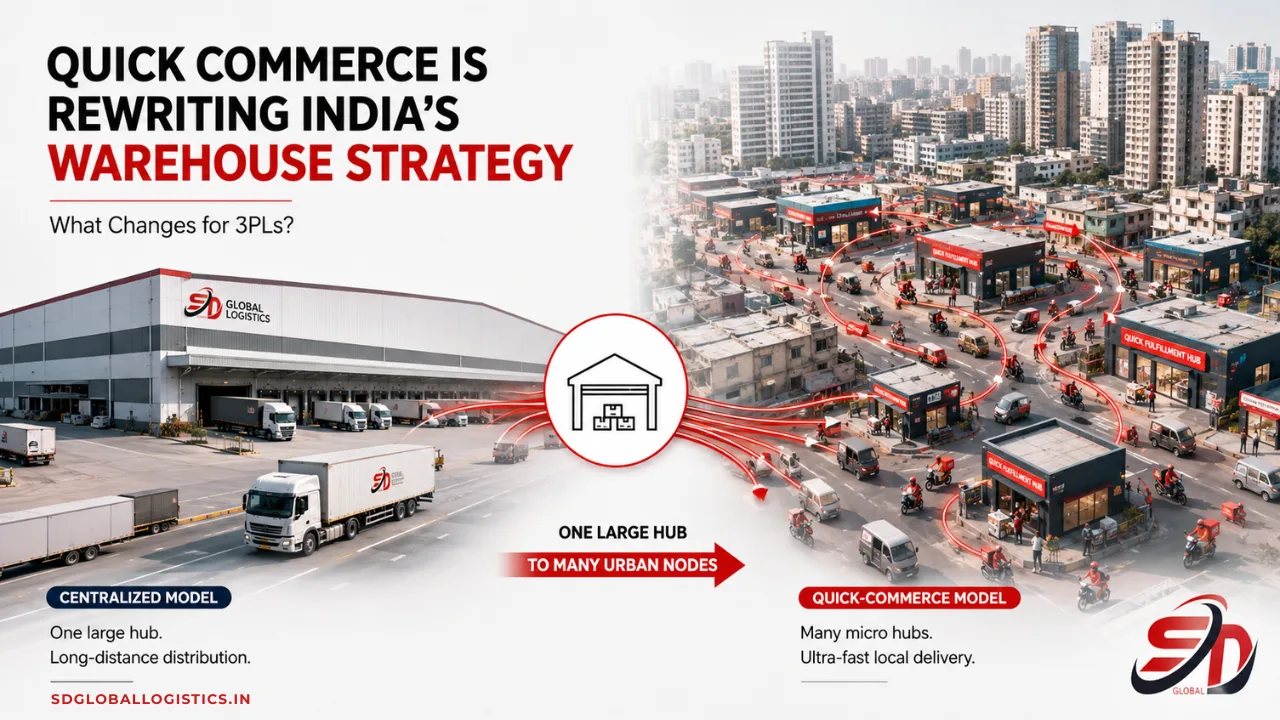
Quick commerce is pushing businesses away from centralised warehousing toward faster, more distributed fulfilment networks — and it is changing everything about how 3PLs manage inventory, locations....
View Blog75+ warehouse locations positioned across major industrial, commercial and distribution markets.
SD Global Logistics — your pan-India partner delivering scalable warehousing, technology-driven supply chain solutions and reliable, cost-efficient logistics for growing businesses
Developed By Rapiditors Technology India Pvt Ltd © 2025. All rights reserved.
Marcus
Ask me anything, I am here to help you.